Troubleshooting
Why WinCC Runtime hangs at alarm logging after a disk clone
Short answer
When Runtime stalls while the alarm archive initializes after a disk replacement, the Windows or WinCC installation is damaged, not the project: an empty project and a client project both start on the same machine while its WinCC services terminate unexpectedly during startup. Recover by restoring the commissioned image to the new disk, then verify services, archive and redundancy.
On this page
- Why does WinCC Runtime stop when the alarm archive initializes?
- How do you prove the project is good and the installation is bad?
- Why does the disk clone carry the fault to the new drive?
- What should Event Viewer and the WinCC logs show?
- Which quick repairs will not fix the hang?
- Can you copy the partner server's project instead?
- How do you recover with the commissioned image?
- Which checks confirm the recovery worked?
- Questions asked
Runtime that stops at the Alarm Logging step while the archive initializes, right after a disk replacement, is telling you the computer is broken, not the project. A sector clone of a failing disk carries the damaged Windows files, WinCC components and service registrations across with the data, so the new disk faithfully reproduces the old fault. The case below, from a PCS 7 V7.1 SP1 system on Windows Server 2003 with two redundant OS servers and two OS clients, was closed by restoring the commissioned image to the new disk, and the evidence that forced that decision is what you get here.
Why does WinCC Runtime stop when the alarm archive initializes? #
The archive startup is the first point where Runtime leans on the server-side WinCC services, the message queues and the database templates that a disk fault corrupts, so a damaged installation fails exactly there while smaller tests pass. An empty project or a client project barely touches those resources, so they start; the real server project reaches for them and the broken installation gives way.
In this case the fault chain ran: Server B began losing client connections, its reboots turned slow, the drive raised a SMART event, and the Windows disk check found and corrected errors. The disk was then cloned sector by sector onto a new one, and from that point Runtime could not get past alarm logging on the new drive. A stall at Graphics Runtime rather than Alarm Logging is a different fault with its own causes; see why WinCC Runtime stalls at Graphics Runtime on start.
How do you prove the project is good and the installation is bad? #
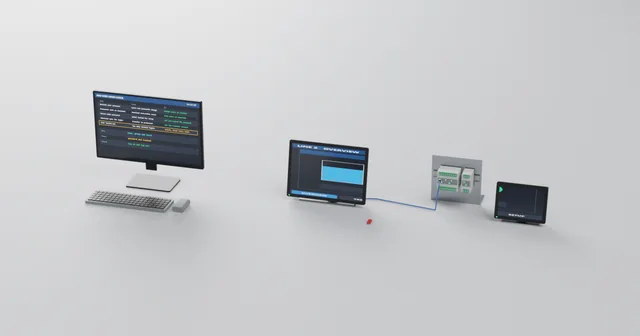
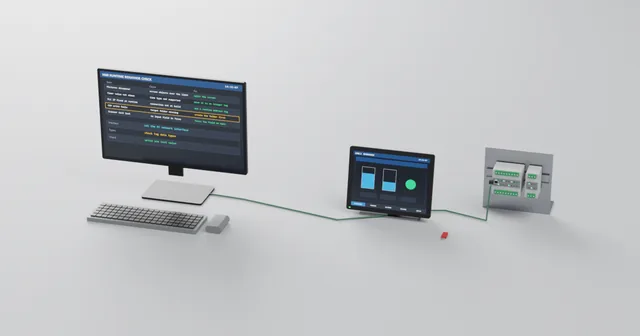
Run four startup tests and read them as one pattern — a new empty project, the server project in a second folder, a client project on the failed server, and the server project on a client station; the verdict comes from the pattern, not from any single result. The outcomes in this case:
- New, empty project on the failed server: started. The executable path works; nothing in an empty project touches archives, redundancy or the full service set.
- The server project in a second folder: hung the same way. The folder path is not the variable.
- A client project on the failed server: started. The machine still runs the smaller client role, which does not initialize server archives.
- The server project on a client station: started there. That proves the project files are readable and nothing more, because an OS client installation does not contain the packages an OS server needs; the only valid qualification platform for a server project is the working OS server.
Now the arithmetic. Three of these tests ran on the failed server itself: two passed and one failed, and the one that failed is the only test that initializes a server archive. Every path that needs the server package set breaks; every path that does not runs. That pattern convicts the installation, not the project.
Why does the disk clone carry the fault to the new drive? #
A clone copies every readable sector, so it transfers the corrected-but-incomplete file system, the corrupted indexes and the damaged application files to the new disk; the drive is new, the logical state on it is the one that was already failing. A disk check repairs file-system structure — indexes, links, allocation tables — so the volume mounts again; it cannot restore application bytes that were never read back correctly. The measurement that matters came after the migration: a second disk check still found corrupted indexes and files. The copied state was broken when it was copied. Replace the drive, yes — and replace the software image on it.
What should Event Viewer and the WinCC logs show? #
Event Viewer holds the verdict: Service Control Manager logs each dead service as event 7031, and in this case several WinCC services whose names begin with CC terminated unexpectedly at the moment Runtime was activated. Work through four sources:
- Service Control Manager events. Filter the System log to the exact startup attempt and count terminations. One new 7031 for a WinCC service during the attempt is enough to move you from project repair to installation recovery.
- The Message Queuing service. Siemens documents a stopped Windows service named Message Queuing as a cause of a Runtime freeze during Alarm and Tag Logging activation, alongside a damaged WinCC template database and a damaged project configuration file. Restart or reinstall that service first, because it costs a minute; if the freeze returns with services still terminating, you are back to the installation.
- WinCC log files. Find the last component that initialized cleanly and the first archive or service error after it; that boundary names the failing subsystem better than the progress text on screen.
- A fresh disk check on the new disk. Corrupted indexes or files found here confirm the copied state is no recovery baseline.
Which quick repairs will not fix the hang? #
None of the project-level repairs touch the failing layer: WinCC reset, an archive reset, deleting the .dc* files, Project Migrator and a folder copy all operate on project data, and the project data is the part that already passed its tests.
- WinCC reset and an archive reset in Alarm and Tag Logging. They clear project-side runtime state; the fault sits below the project.
- Deleting the
.dc*files. It takes away project access in WinCC Explorer until the files are restored and does nothing to the hang. - Project Migrator. It converts project data between versions; it rebuilds nothing in Windows or the WinCC installation.
- Copying the project to another folder. Already tested above; same hang.
A Runtime that starts cleanly and deactivates later, when the alarm report fails, is a separate fault with a separate fix; see why WinCC Runtime deactivates when the alarm report fails.
Can you copy the partner server's project instead? #
No: the folder test already proved that any server project hangs on that damaged installation, and stopping the healthy partner's Runtime to make a consistent copy trades your one good server for nothing. Three reasons close the question.
- Same broken ground. A project from Server A lands on the same damaged package set and hangs exactly like the project from Server B; the second-folder test already measured that.
- No consistent copy. A project folder copied while its Runtime runs is not a consistent copy, and making one means stopping the server that is currently in control — a risk to the plant, not a repair.
- Wrong identity. For building a redundant partner from a standalone WinCC project, the documented route is Project Duplicator in the Siemens Automation program group, because it keeps the partner's redundancy settings; that is a tool for constructing a pair, not for rescuing a broken machine. In PCS 7, the equivalent is regenerating and downloading from the engineering station while the partner stays in control.
How do you recover with the commissioned image? #
Restore the image captured at commissioning to the new disk, because it is the only copy holding the installation as it was before the drive began failing; in the case above that single step returned the server to service.
- Keep the healthy OS server in control and take the failed server out of service under the site's operating procedure; nothing below is worth a plant outage.
- Install the replacement disk, and do not return the drive that raised the SMART event to service.
- Restore the commissioned image to the new disk. Never use the clone of the failing disk as the master: it holds the state that produced the service failures and the file errors.
- Boot and confirm Windows starts without the earlier slow-reboot behavior and without new storage or file-system errors.
- Start the existing server project with computer name and redundancy identity left at their commissioned values; a recovery is not the moment to rename anything.
- Let Runtime pass Alarm Logging and complete archive initialization.
- Rejoin the redundant pair only after the standalone start and the checks in the next section pass.
When no commissioned image exists anywhere, the decision changes shape but not direction: rebuild the machine from media and download the project from an engineering station. If that download fails with database errors, fixing a PCS 7 OS download that fails with SQL errors is the next stop.
Which checks confirm the recovery worked? #
Pass is five readings in order: a clean boot, WinCC services that stay up, Runtime past Alarm Logging, alarms and tag values you can retrieve from the archive, and both servers holding their roles without connection loss.
- Boot. Windows starts normally, with no new disk or file-system errors logged during that boot.
- Service stability. Event Viewer records zero new unexpected terminations for WinCC services across the whole startup attempt — zero for this attempt, whatever the history holds.
- Runtime sequence. Startup advances past Alarm Logging, finishes archive initialization and settles into operation.
- Archive operation. Raise a test alarm or force a tag update, confirm it appears on screen and then retrieves from the archive; a running screen alone does not prove the logging path recovered.
- Redundant operation. Both servers report their intended roles and the clients stop losing connections.
All five green and the server goes back into the pair; any one red and you restore the image again or rebuild — you do not return to project repairs, because that layer was never guilty.
Questions asked
Does a SMART warning on its own condemn the installation?
No. The warning says the drive is failing, not that software is already corrupted. What condemns the installation is measured damage: a disk check that corrected errors, a later check that still finds corrupted indexes or files, and WinCC services that terminate unexpectedly at startup. With a clean check and stable services you image the healthy disk and carry on; the case in this article failed all three readings.
Why does deleting the project's dc files make it unopenable?
Those files hold structure data WinCC Explorer needs to open the project, so deleting them costs you access and repairs nothing; the archives and runtime behavior stay exactly as they were. Restoring the files only hands the access back. Treat that step as off the table whenever the hang followed a disk fault, because the layer it touches was never the failing one.
Is a sector clone of the server disk a usable backup?
Only when it is taken from a healthy machine. A clone made after the drive has already corrupted files preserves the damage exactly, which is what happened here. Keep an image captured at commissioning and refreshed after each accepted software or project change, stored off the server itself; that image is the recovery baseline, and the failing disk's clone never becomes one.
What if no commissioned image was ever kept?
Rebuild in order: Windows at the service level your PCS 7 version requires, then the OS server packages, then the project regenerated and downloaded from an engineering station. If the engineering station is gone too, its rebuild comes first, because a server project qualified only on a client station is not a commissioned server. Treat the job as a re-commissioning with a full acceptance pass, not a repair.